Tuesday, 15 April 2014

Star Trek: Third Eye Blind


This post is my response to the Star Trek Voyager review of Meld from Confused Matthew. It's a  wonderful review that reminded me of just how much wasted potential there was in Star Trek Voyager. What had not occurred to me before Confused Matthew's review however, was how awesome Suder might have been as a long-term  recurring character. It also got me thinking about the Betazoids and how much smaller their presence in the franchise is compared to, say, Vulcans or Klingons. Given the facile, uni-dimensional approach to fictional species on Voyager, Suder's status as a Betazoid is meant to be a novelty and is only ever mentioned once or twice. But then I remembered something Deanna Troi said during the TNG episode, "The Loss".  During the course of the episode, Deana loses her empathic sense completely. At one point, her friend and ex-lover, Will Riker, tries to comfort her and she sobs that he's no more real to her than a character in a holodeck program. I think that this offers us a possible reason for not only why he was able to so easily take people's lives, but also why he didn't seem able to express why he was driven to kill. It's not that he was driven by anything; it's that nothing was holding him back.  Just like Commander Troi, people aren't real to him. Killing them is  like erasing a hologram.

Troi's loss of her empathic sense is much more profound than her ability to read emotions. Even when she encounters Ferengi whom she normally cannot read, she can still sense their consciousness. They're still real. In "The Loss", it's as if there's nothing there in the people around her.  Most of the times that Troi uses the Holodeck she tends to use landscapes rather then programs where she interacts with characters. Likely this is because she cannot suspend her disbelief enough to do so. This puts her friendship with Data in an interesting light, Does she perceive a vague unreadable something emanating from his positronic brain? Or does she learn to recognize his personhood in the absence of the evidence thereof that she relies on. This would have been a fascinating interaction to explore given that she's a psychologist and he's an autonomous, artificially intelligent person.  I like to imagine that she published a mountain of articles and case-studies about him or that whenever they played 3d-chess, she was engaging in participant observation or something.

I think of how lost and angry Troi becomes in the Loss. Obviously, she was reeling from losing one of her senses. What if she was also afraid? Maybe she was anxious about becoming a monster like Suder. Maybe the dirty little secret of the Betazoids is that when they succumb to solipsism they become  more violent than any Klingon and more twisted than any Romulan.

With a bit of effort and attention, the Betazoids could have been a fascinating and, frankly dangerous species. The trope of gentle empaths is ubiquitous in Sci-fi. Having their telepathy be the only thing keeping them from being super-creepy monsters might have yielded a narrative goldmine for Star Trek.

Monday, 14 April 2014

High Contrast

For some reason, I remember the late 90s as being a really great era for movies. I think it's just that I went to the cinema more often back then than I do now. It was also a pivotal time for me: young adulthood, life in a new country and discovering my identity as a queer person.  Of course, that meant that I watched nearly every queer themed film that came out in  theatres in at the time.


High Art portrays a relationship between Syd, a young photo editor and Lucy, a reclusive former photographer who happen to live in the same building. Both women are already in relationships, the former with a boyfriend, the latter with a girlfriend. Long story short, the two characters engage in a  romantic and sexual affair. Complicating matters is that Syd's magazine wants her to convince the photographer to shoot for them after years of obscurity. Working so closely together both intensifies and threatens their relationship.

If I remember correctly, this was a comeback for Ally Sheedy, known for being in the John Hughes classic The Breakfast Club. She joins a great cast including Radha Mitchell as the younger love-interest, Patricia Clarkson as a delightful German heroin addict and Gabriel Mann as Syd's cuckold. Even though this film came out over a decade and a half ago, everyone looks mostly the same now as they did then.

The relationship between the two leads is one of contrasts: blonde/brunette, mature/youthful, artist/editor, sober/addicted. These differences draw them to one another. Suffice it to say the relationship has a few obstacles, namely that one of them is a heroin addict and both of them are already spoken for. It is to this film's credit that the affair doesn't feel doomed. From the outset the association between the two women feels  finite. Sheedy and Mitchell seem to insert that awareness into their characters. Another thing I appreciated was that no excuses are made for their infidelity and most important of all, the people being cheated on are not villainized in the process.

It is impossible to discuss High Art without including its third protagonist: heroin. The stuff is everywhere. The 'high'of the title takes on several meanings: aesthetic judgement, opiate-induced euphoria and the limerence of new love. It's difficult to separate the three. The various party scenes in Lucy's apartment are weighed down with lethargy, her circle of hangers-on seem as if they are in slow-motion. Lucy herself often seems mesmerized by everything she encounters. Both Gretta (Lucy's lover) and James (Syd's boyfriend) question Syd's interst in Lucy. I'm fairly certain that we're supposed to see the relationship as an epic romance that liberated both characters. It comes across more ambiguously because of the performances of Gabriel Mann and Patricia Clarkson. Rather than jealous bitter losers or rejects, they each invest their criticisms of Syd with a calm perceptiveness as if they really are seeing red flags rather than grasping at straws.

I like that the Syd's bisexuality is not portrayed as inherently problematic. Having said that, her relationship with her boyfriend is presented as boring and staid yet stable compared to the creatively stimulating yet volatile relationship between her and the photographer. Overall, this is  lovely example of Queer Independent Cinema from the 90s.

Sunday, 13 April 2014

EBTG Unplugged.

Everything But the Girl: Acoustic 


This is one of the most pleasant albums to listen to from start to finish. The tracks are all live performances and one can hear audible applause at various points. Ben Watt and Tracey Thorn prove two things here: their merit as performers, their talent as songwriters.


The covers are all lovely and more importantly imprinted as Everything but the Girl songs. The Idol franchise always hammered in the concept of making the songs your own, but here EBTG. Of the five covers of this album, one stands out for me in particular. Time after Time, one of the most relentlessly covered pop standards of all time, is simply magical here. Ben and Tracy sound amazing together and it shows that they've been singing together for most of their lives. Come on Home sways with warmth and sensuality.

The stripped down version of  Driving is the only one I listen to anymore, it's that perfect. Apron Strings also benefits from being simplified. The acoustic version is more crystalline and the addition of a harmony renders the song magical. Fascination gets the most applause before silencing its audience with Tracey's intimate vocals. It is an incredible closer for an album that displays such emotional range for a quiet acoustic album.

There's just something about the acoustic set. Video sharing sites are full of them. Established stars and emerging artists alike use them to showcase their talents. They offer recording artists a chance to prove their mettle away from the cocoon of the studio. With this 1992 release, Everything but the Girl showed off their considerable skills and left us with something truly special.


Odd One Out: The Adventures of Ishtar

Macross II: Lovers Again is an oddity in the Macross Franchise. Relegated to a secondary continuity, it kind of gets lost in the fandom. It's not that it's bad, exactly. Its aestehetic is very Macross. The world portrayed is quite interesting too: cities built on top of crashed Zentraedi ships, the implication that most of the Earth's population are micronized Zentraedi or human-Zentraedi hybrids and a militarized Earth's hubris around the so-called 'Minmei attack'.

Set eighty years after Space War I, Macross II has a separate continuity to the franchise, being conceived as a sequel to Macross Do You Remember Love? 

In my mind, the element that elevates this OVA from merely 'okay' to 'underrated' is its protagonist Ishtar. She is a well conceived and well-written character with a clear and compelling narrative arc. In fact, her story is the strongest element of Macross II.

The Macross conceit of a pop star's voice affecting an alien army is subverted with the introduction of the Marduk who apparently figured out the whole 'Minmei' effect as well. It's actually quite fascinating to  imagine  the story of SDFMacross playing out differently on another world, several different species dealing with the Zentraedi each in their own way. Rather than integrate them, these guys  have enslaved a Zentraedi army of their own using young women of their number to sing haunting refrains to hypnotize them.  Ishtar is one of these women.

The character design is suitably otherworldly when she is introduced to us a one of the Marduk. Her look becomes more girl-next-door yet still recognizable as opportunistic journalist Hibiki shows her around Earth. Unlike more iconic Macross characters like Max or Mirya, her hair and eye colours are more pastel shades, giving her a generally soft, ethereal appearance.

Especially welcome is her reaction to the resolution of Macross II's love triangle. Hibiki chooses to rekindle things with his ex-lover, Sylvie, at the end of the series. While she's clearly disappointed, Ishtar takes it like a champ. She allows herself to feel like shit about being rejected while appreciating Hibiki's friendship and setting off to reform her entire society.

She's already off to a good start. It is she who turns the tide in the war between Earth and the Marduk. Even more than Misa Hayase, Ishtar is the protagonist of her show. However, while Misa had other strong characters to share the limelight with, Ishtar doesn't. She stands out amongst characters that could have been better than they were. Frankly that might be a fair assessment of Macross II generally: great protagonist, interesting ideas and lots of potential. 

Thursday, 24 October 2013

"I am No Longer Like the Others..."

For the life of me I have never understood how anyone could say they have no regrets. The very  act of making choices leaves one with a road not taken. The very act of living entails giving something up. Regret figures heavily in The Last Unicorn, one of the defining traits of the Unicorn is that she feels no regret. It's part of what makes her other than human (you know, outside of being a magical quadruped). The Unicorn has a lot of negative experiences she one would think might cause her to regret her choices. However, it's only when she is takes on human form and then changes back into a Unicorn that we see her understand regret.

Initially, the change is a desperate attempt by Schmendrick to save the Unicorn. During her first encounter with the Red Bull, she freaks out and the beast nearly send her into the sea. It's a brilliant idea, as the Bull discards her immediately. The plan works and Amalthea, along with Schmendrick, Molly and Lir, find the Red Bull and confront him. Schmendrick returns the Unicorn to her natural form and she chickens out again. Lir tries to get between them and is mortally wounded. This causes the Unicorn to snap out of her fear and drives the Red Bull into the sea the way it did to the Unicorns. Her brethren take this as their cue to re-materialize out of the surf and stampede out of the sea.

The transformation from Unicorn to Amalthea interests me on multiple levels. First, it feels like a price she must pay to fulfill her quest. Second, it's fascinating how the 'fake' identity of Amalthea becomes real. The transformation starts on the outside and works its way in. It's as if walking around in a human body has given her a human heart and a human mind. Even King Haggard starts to notice. The first time he creepily gets in her space, he sees the Unicorn's home forest in Amalthea's eyes. The second time he accosts her he sees his own reflection, which pisses him off. Falling in love with Haggard's son, Lir seems to have helped things along. While it is may seem obvious that the romantic connection between the Lir and Amalthea is what makes her identify as a mortal being, I'm not sure it's that simple. Lir only loves her because she's a pretty, human-looking princess. Love, for all its poetry is a superficial process.

Now that she has regained her immortality, the Unicorn will spend that eternity wondering what might have been had she abandoned her people to their watery prison and walked away from her quest. She would have lived a finite human life at Lir's side... wondering what might have happened had she faced the Bull and freed the Unicorns.That is why I can neither accept nor believe those who claim to live without regret. Every choice great or small carries with it the weight of what might have been. What the Unicorn shows in her final conversation with Schmendrick is that she can carry that burden with grace and dignity.


Monday, 21 October 2013

"Is That What You Wanted to See?"

Everything 

But the Girl:

Amplified Heart 


This album is known for one thing more than anything else and I'll get to that thing in good time but I have to start this review with a pet peeve of mine. It annoys me to no end when recording artists put out records that amount to singles and filler. It's insulting when I put more thought into my bedtime playlist than a singer or band's team puts into their album. While I understand that this sort of thing is generally a result of the creativity vs. business cage-match,  it still sucks.

Which brings me to Amplified Heart. Everything but the Girl are every inch the album artist. Their records are truly coherent bodies of work that hold together nicely.  A mostly acoustic album, Amplified Heart features some of the best songwriting I've ever come across in my life. It is, of course, the album which yielded the duo's biggest hit. But that signature song is often remembered in isolation from the LP it was born into. I find that there is much more to it when considered alongside its siblings.

Rollercoaster opens the album with a languid and very British take on bossa-nova. The 'other' single from Amplified Heart, it's one of my favourite songs from EBTG. It sets the tone for the rest of the album with its combination of wistfulness and  longing. Troubled Mind is a jaunty mid-tempo ballad with some jazz guitar popping in towards the end. It speaks about the inscrutability of other people. This desire to get inside the head of another and the anguish at not being able to recurs throughout Amplified Heart.

I Don't Understand Anything  carries us into EBTG's trademark melancholy. Much slower and more deliberate than the previous two tracks, the song delivers a great deal of pathos. Walking to You  is a duet with Ben and Tracy singing either side of a bittersweet reunion between two exes. Get Me wonders aloud about ever being understood, its mercurial lyrics going nicely with a brooding cello.

Missing is the song that EBTG are known for. In terms of commercial success, it eclipses everything else that they have done. One can speculate why "Missing" blew up the way it did, or why it was this song and not, say, "Driving". But I, personally, am not qualified to know what made it happen. I will say that it's the acoustic, album version of the track that I fell in love with and listened to endlessly through high school. The complicated guitar riffs, the dramatic strings and the ever so slight bounce of the bass guitar all adding up to a plaintive account of loss and longing. "Missing" fits perfectly at the centre of Amplified Heart.

Two Star gives us one of the more complex entries on this record. It narrates someone who can't resist commenting on another person's relationship. It's a wince-inducing character-study brimming with resentment and bitterness. We Walk the Same Line is a more rootsy song about adversity and difficulty. It takes the perspective of one person reassuring another that they are not alone in going through tough times. The lyrics are especially resonant for me given some  of the things I've been through since the first time I listened to this song. 25th of December sees Ben Watt takes lead vocals on a simply arranged number with a haunting refrain.  Disenchanted is a quietly low-key closer which seems to sum up the experience of Amplified Heart. Tracy Thorn's intimate vocals deliver contemplative lyrics in the second person. A saxophone takes on the role of a duet partner adding a level of sophistication and wistfulness to the track.

Amplified Heart to me represents Everything but the Girl at their apex. Obviously the Todd Terry Remix of "Missing" took over the world for a year and a half but the real triumph in my view, is the creative accomplishment represented by Amplified Heart. It is no less than one of the most beautiful  albums I have ever listened to. Pop music that is truly mature is hard to come by. These songs touched me deeply when I was young and they still work for me to this day. 

Thursday, 17 October 2013

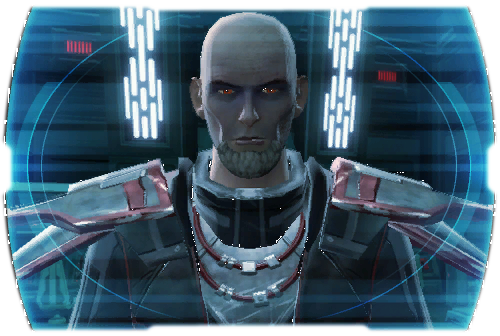
A Plague Upon Your Houses!!!!: A review of the Jedi Consular Story part 8


So your new Jedi has been travelling the galaxy trying to stop a mysterious plague that's affecting various Jedi Masters, pulling them under the thrall of a Lord Vivicar. Each time you're confronted with a possessed Master, you have the option of either killing them or using an obscure healing technique learned on Coruscant to save them (I've been killing them).

Once you've completed the class quests on Alderaan, Taris, Tatooine and Nar Shaddaa, Master Syo Bakarn summons you to the Jedi home-world of Tython.  Things are bad. More Masters are being affected by the plague. You tell the council What you've pieced together so far:  all of the Masters initially affected were all stationed once on the planet Malachor 3 and the name Parkanus comes up a lot. As it turns out, the Masters who wound up on Malachor 3, stumbled upon the apparition of a dead sith and had to leave one their own behind i.e.,  Parkanus.  The poor guy was possessed by said Sith Lord and resurfaced recently with this plague as Lord Vivicar.  Yuan volunteers to try and contact Lord Vivicar telepathically even though that might make her vulnerable to the plague again. It does, Vivicar possesses her and you fight. At the end of the confrontation, you have the option of killing her or  using the healing technique on her.  Since I played my Consular dark-side, I killed her.

All is not lost however. Yuon was able to give us a location and so off we go to Lord Vivicar's ship.  The confrontation with him is the same as with all of the bosses so far but with an extra fight or two. The dialogue is either about vowing to put him down (dark-side) or offering him redemption (light-side). I frelling killed him. Unfortunately that meant that a lot of the Jedi Masters he had infected in the meantime died with him. You even get an e-mail from the Council with a list of all of these dead Jedi.

Having played this Darkside, I was disappointed that there were no consequences to having fallen. I mean it's not even a subtle thing. My dark-side Jedi was ruthless, cold, vengeful and without compassion. It's not like he saved the day either: a whole bunch of Jedi Masters have died not the mention the five my character killed for the crime of getting preyed upon by Vivicar. The most that comes of this obvious slide down the slippery slope is Grand-master Satelle Shan throwing some shade about 'your methods'.

Here's the thing: I appreciate what Bioware tried to do with the Consular in Chapter1 but it didn't work for me. It seems that the story was supposed to be reminiscent of KOTOR II. The Malachor system and  the search for Jedi Masters are obvious references to the darker story-line of the KOTOR II. One broad similarity between KOTOR II and the Jedi Consular story as a whole is the feeling of being behind the scenes. The events of the former game were taking place inside of a secret history that few people in the era of the Old Republic are even aware of.

Your consular, however you choose to play him or her, is dealing with issues that are not public knowledge, unlike the Jedi Knight who is more front and center in Galactic events. This crisis of Jedi Masters going crazy is, on the surface, perfect for that kind of story. But SWTOR and KOTOR II are completely different contexts for such similar events. In the case of the latter, the Jedi were almost extinct, the atmosphere was bleak and the story took place on the margins of Republic space. SWTOR features a more powerful Republic with a strong Jedi Order, evenly matched with The Empire and its Sith.

Here's an idea: if Bioware wanted to reference KTOTOR II in the first chapter of the Jedi Consular adventure, then why not do so more explicitly. Instead of all this nonsense about LordVivicar, why not have a character from  KOTOR II be the villain? Say, someone who could conceivably live on as a Force Ghost?


I sincerely hope that they at least tried to include Kreia but just couldn't swing it for whatever reason. Because this version of the story writes itself.  Kreia was a historian and a keeper of secrets. She discovered the Sith Academy in the Malachor system. She was a Consular, epitomizing the concept SWTOR described for the class.  She hated (and I mean hated) the Force and almost succeeded in making it inaccessible to Sith and Jedi alike. Attempting to do so again through the Consular in SWTOR would have been more interesting than the plague. What if she had possessed Master Yuan in an attempt to find the perfect apprentice? The best thing about her was her perspective on Galactic history, what might she make of what's happening in the 'present tense'? Didn't she foretell the Sith Empire returning? God help me, I might write a fan fiction myself just to prove how awesome it might have been.

Until then I have Chapter 2 to review. While I have been somewhat critical of Chapter 1, things improve quite nicely from here on out.  Stay tuned!!!